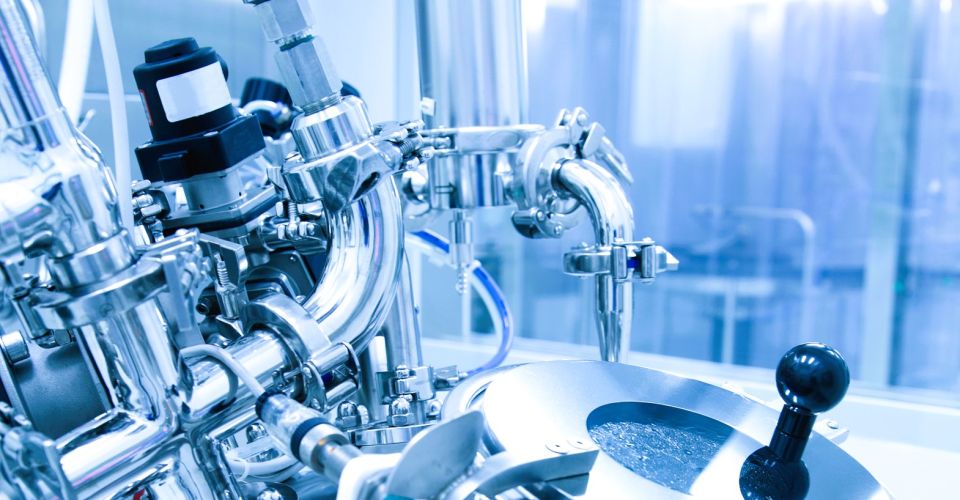
Copyright: photosoup - Fotolia
Project

MES Implementation for a Cell Culture Facility

SpiraTec Develops End-to-End MES Integration for the Production of Recombinant Protein Products

For a newly constructed cell culture facility dedicated to the production of recombinant protein products, SpiraTec implemented a fully integrated Manufacturing Execution System (MES) solution based on Körber Pharma Software PAS-X for a pharmaceutical company in Austria.

Introduction of a “review-by-exception” concept

to accelerate batch release

Higher process and data quality

through digital employee guidance

Reusable generic MBRs

for different products

Complete transparency

regarding production and quality data

Project Overview

At A Glance

Customer

Pharmaceutical company

Location

Austria

Industry

Pharmaceuticals

Services

MBR design, PVL creation, master data maintenance, commissioning support, training

Technologies

Körber Pharma Software PAS-X, MSI, SAP, vertical integration

Special Features

Review-by-Exception, generic MBRs, customer-specific manufacturing template, full vertical integration

Digital Transformation Successfully Implemented

In the highly dynamic environment of a new plant construction project, the SpiraTec team demonstrated its expertise in both MES development and the integration of numerous partner systems such as SAP, AVEVA PI, and Emerson DeltaV. We were able to successfully prove that we meet the highest quality standards for pharmaceutical customers as they advance the digital transformation of their production.

– Frederik Dietrich, Team and Account Manager, Industrial IT Services, SpiraTec AG
Project Goal

Generic Master Batch Records for Maximum Flexibility

The goal of the project was to digitally map the production processes from the outset and lay the foundation for efficient, scalable, and GMP-compliant manufacturing. The recombinant protein products manufactured are required for modern biopharmaceutical therapies and thus make an important contribution to providing patients with life-saving medications.

In contrast to traditional “paper-on-glass” approaches, a fully vertically integrated system architecture was implemented. By utilizing MSI technology, process, quality, and production data could be automatically exchanged between the involved systems. This enabled the introduction of a “review-by-exception” approach for batch release and significantly reduced the manual review effort.

With our MES strategy, we are driving consistent end-to-end digitization of production and sustainably increasing transparency, quality, and operational excellence.

Client Project Manager

A central component of the project was the development of generic Master Batch Records (MBRs) for the entire manufacturing process. The MBRs were designed to be product-independent, enabling flexible use across different recombinant protein products. This allows new products to be implemented more quickly and processes to be standardized.

  • In addition to creating the MBRs, SpiraTec was responsible for maintaining the necessary master data, creating the Parameter Value List (PVL), providing commissioning support, and training users.
  • Thanks to this generic approach, engineering and validation efforts were sustainably reduced, and future product implementations were significantly accelerated.
  • At the same time, a flexible and future-proof solution was created that can continue to be used even with new products, process adjustments, or plant expansions.
  • The chosen approach is thus not only effective within the project context but is also fundamentally transferable to comparable biopharmaceutical production facilities.
Technical Realization

Full Vertical Integration as the Basis for Review-by-Exception

The technical implementation placed high demands on the SpiraTec project team. In addition to integrating the MSI interface, an existing PAS-X version 3.1.8 had to be incorporated into the new production environment. At the same time, the ERP landscape was migrated from SAP R/3 to SAP S/4HANA, while the manufacturing process itself was still under development.

Additional complexity arose from the use of a customer-specific Global Manufacturing Template (GMT), which was employed in place of standard PAS-X functionalities.

Despite these challenges, the team successfully implemented a seamless, ISA-95-compliant integration architecture that links production, quality, and master data across all systems.

Despite these challenges, the team successfully implemented a seamless, ISA-95-compliant integration architecture that links production, quality, and master data across all systems.

The implemented solution lays the foundation for efficient and future-proof production in the pharmaceutical sector.

  • Reduction of manual verification and documentation efforts
  • Reduced engineering and validation effort for future expansions
  • Scalable system architecture for future production requirements
Project Highlights

Modern MES architecture for the pharmaceutical production of tomorrow

Introduction of a “review-by-exception” concept

to accelerate batch release

Higher process and data quality

through digital employee guidance

Reusable generic MBRs

for different products

Complete transparency

regarding production and quality data

The project demonstrates how modern MES solutions can make a significant contribution to the digitalization of pharmaceutical production facilities through vertical integration, standardized data flows, and intelligent batch processes.

By consistently eliminating paper-based processes, utilizing MSI technology, and deploying generic MBRs, a future-proof solution was created that equally supports efficiency, compliance, and flexibility.

Get in touch

Does this challenge sound familiar?
If so, please feel free to contact us, and together we’ll find a solution.


Michael Henter

Industrial IT Services